Logo vs Brand Identity: What's the Difference, and Which Do You Need?
A logo is the signature. A brand identity is the whole handwriting. Here's what each one includes, and how to tell which your business actually needs.
In this article
Ask ten business owners what they need, and many will say "a logo." Ask a designer what those owners actually need, and the answer is often "a brand identity." The two get mixed up all the time, and that confusion leads to wasted budgets: a beautiful logo that looks wrong everywhere it's used, or a full rebrand when a simple mark would have been enough.
This guide explains the difference in plain language, shows what a complete identity includes, and gives you a simple way to decide which one your business needs right now.
What a logo is
A logo is the mark that identifies your business. It can be a wordmark (your name set in a distinctive way), a symbol, or a combination of both. Its job is recognition: when someone sees it on a sign, an invoice or an app icon, they should know it's you.
A good logo is:
- Simple, so it still works at the size of a favicon.
- Distinctive, so it isn't confused with competitors.
- Flexible, with versions for light and dark backgrounds, horizontal and stacked layouts, and a compact icon.
Most professional logo projects deliver a small logo system rather than a single file: a primary logo, a secondary layout, an icon, and color and one-color versions.
What a brand identity is
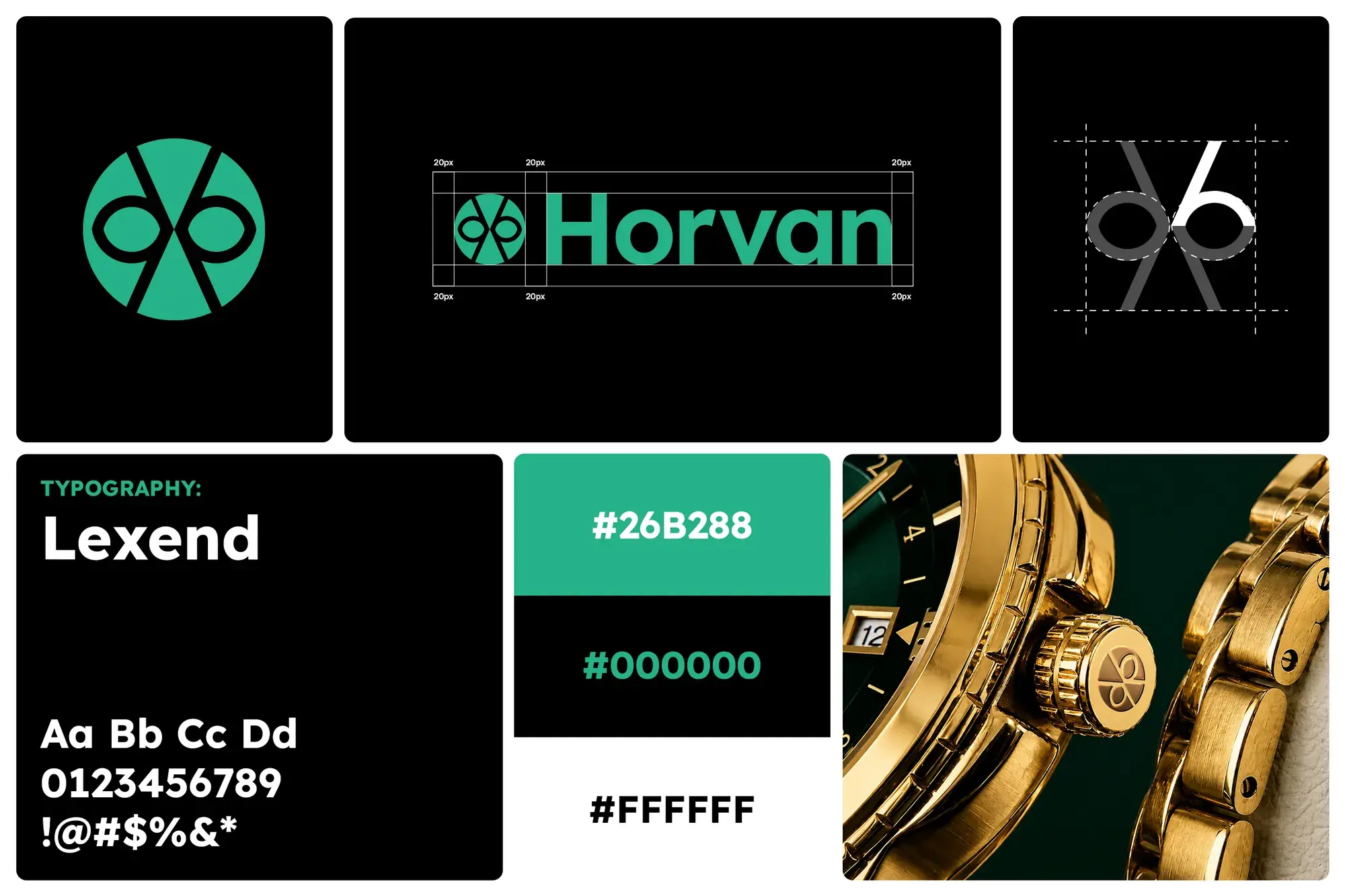
A brand identity is the complete visual language of your business. The logo is one piece of it. The identity defines how everything else looks and feels, so your website, packaging, social posts and presentations all feel like they come from the same company.
A typical brand identity includes:
| Element | What it does |
|---|---|
| Logo system | Primary logo, variations and icon |
| Color palette | Primary and supporting colors with exact values for print and screen |
| Typography | Headline and body typefaces, and how to use them |
| Graphic elements | Patterns, shapes, icons or illustration style |
| Imagery direction | The style of photography or visuals you use |
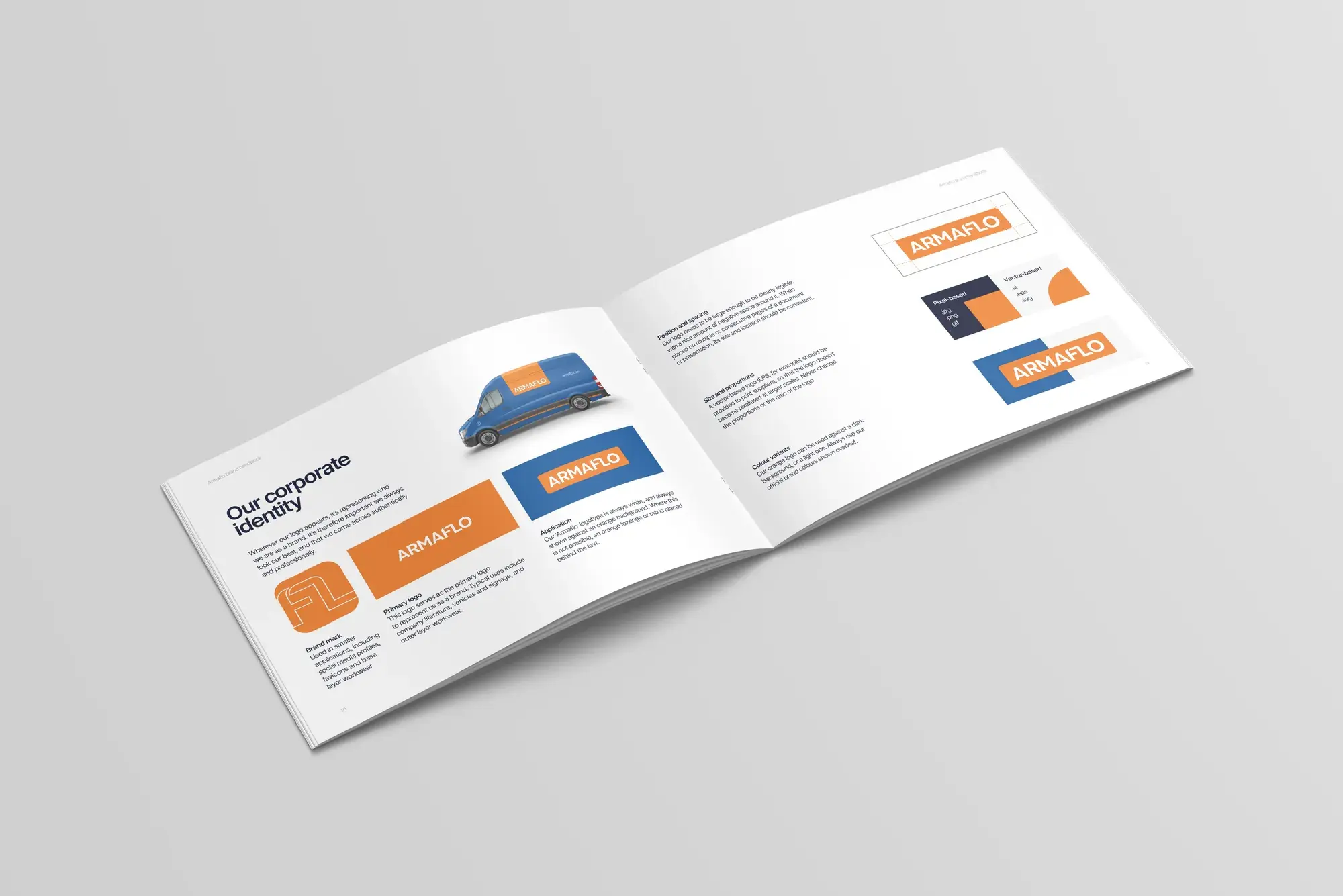
| Brand guidelines | Rules that explain how to apply everything correctly |
Behind the visuals there is usually a layer of brand strategy: who you serve, what makes you different, and how you want to sound. That strategy is what makes the visual choices feel intentional rather than decorative.
A simple way to see the difference
Think of your brand as a person's handwriting. The logo is the signature: short, recognizable and used to sign things. The brand identity is the handwriting itself: how every letter, word and page looks. You can have a great signature and still write everything else in a messy, inconsistent hand.
That's what happens when a business has a logo but no identity. The logo is fine, but the website uses one font, the brochure another, social posts use whatever colors look good that day, and nothing feels connected.
When a logo is enough
A logo on its own can be the right call when:
- You're testing an idea and need something professional to launch with quickly.
- Your business has very few touchpoints, such as a simple website and business cards.
- You already have established colors and fonts and only need a new mark.
- Budget is tight, and you plan to invest in a full identity once the business proves itself.
If you go this route, ask for the logo system (not a single file), plus a short note on colors and fonts. That small step prevents a lot of inconsistency later.
When you need a full brand identity
A complete identity is worth it when:
- You sell in a crowded market, where looking different is part of winning attention.
- Customers see you in many places: packaging, retail, social media, events, vehicles or an app.
- Several people create materials, such as in-house marketers, freelancers or franchisees, and you need them to produce consistent work.
- You're raising investment or repositioning, and need to look as credible as your plans.
- You've outgrown your current look and it no longer reflects the quality of what you offer.
Product brands are a good example. A skincare or food brand lives on shelves, in delivery boxes, on social media and in ads. Without a system of colors, typography and patterns, each new product or campaign drifts further from the last. With one, every new item instantly looks like part of the family.
What a brand identity project usually looks like
Every studio works a little differently, but most identity projects follow a similar path:
- Discovery. Conversations and questions about your audience, competitors, goals and personality.
- Strategy. A short summary of positioning and tone that the design must express.
- Concepts. A focused set of visual directions, each with a clear rationale.
- Refinement. The chosen direction is developed into a full system and tested on real applications, such as packaging, a homepage or a social post.
- Guidelines and handover. Source files, export packs and a guide that explains how to use it all.
The testing step matters most. An identity that only looks good on a presentation slide isn't finished. It should prove itself on the things your customers actually see.
Questions to ask before you hire someone
Whether you need a logo or a full identity, these questions help you compare designers and agencies:
- Will I receive a logo system, or a single logo file?
- How many concept directions will I see, and how are they chosen?
- Will the identity be tested on real applications before it's final?
- Which files and formats will I get, and will I own them outright?
- Are brand guidelines included, and how detailed are they?
The short answer
If you need to launch quickly with few touchpoints, start with a well-built logo system. If customers meet your business in many places, or several people create materials for you, invest in a brand identity. It's what turns a nice logo into a brand people recognize everywhere.
Not sure which fits your stage? Tell us about your business and we'll give you an honest recommendation. You can also see examples of complete identities in our work, or read more about our brand identity and logo design services.
- logo design
- brand identity
- branding basics
How we can help
Logo Design
Distinctive, versatile logos and marks built to last.
Brand Identity
Strategy, identity systems and guidelines that make a brand recognizable.
Related articles
Branding4 min read
What to Include in Brand Guidelines: A Practical Checklist
Brand guidelines turn a logo and a few colors into a system anyone can use. Here's exactly what to put in yours, section by section.
Product & MVP4 min read
How to Scope an MVP: Build Less, Learn Faster
An MVP isn't a smaller version of your product. It's the fastest way to answer your riskiest question. Here's how to scope one properly.
Web Design5 min read
How to Write a Website Design Brief (With a Free Template)
A good brief is the cheapest way to get a better website. Here's what to include, why it matters, and a template you can fill in today.
Have a project in mind?
Tell us what you're building. We'll get back to you with questions, ideas and next steps.